Vier Quellen des ROI
Bei KI im Krankenhaus wird oft zuerst über Anwendungen gesprochen: Arztbriefe, Kodierung, Wissenssuche, Einkauf, Personal oder IT-Support.
Für die Geschäftsführung zählt am Ende eine andere Frage:
Was verändert sich wirtschaftlich, wenn KI nach und nach in vielen Bereichen des Hauses genutzt wird?
Der ROI entsteht meist aus mehreren Effekten:
-
zusätzliche Erlöse
-
niedrigere Kosten
-
mehr verfügbare Arbeitszeit
-
geringere Risiken
Wenn mehrere Anwendungen auf derselben Plattform laufen, verteilt sich der feste Aufwand auf mehr Nutzer und Prozesse.
Es ist nicht nötig, heute schon alle künftigen Anwendungen festzulegen. Für die Investitionsentscheidung muss erkennbar sein, wo der wirtschaftliche Nutzen entsteht und wie er berechnet wird.
1. Zusätzliche Erlöse
Viele Informationen, die für Kodierung und Abrechnung relevant sind, stehen bereits in Arztbriefen, OP-Berichten, Befunden, Materialangaben oder Medikamentenverläufen. Sie werden nicht immer vollständig berücksichtigt.
KI kann diese Informationen suchen, zusammenführen und auf Abweichungen hinweisen. Zum Beispiel auf:
-
mögliche Zusatzentgelte
-
relevante Nebendiagnosen und Komplikationen
-
fehlende Angaben für GOÄ- oder Wahlleistungsabrechnungen
-
Ansatzpunkte für MD-Widersprüche
-
Dokumentationslücken vor Fallabschluss
Die KI verändert keine Kodierung und erstellt keine ungeprüfte Abrechnung. Die fachliche Bewertung bleibt beim Medizincontrolling und bei den Kodierfachkräften.
Für den ROI zählt nur der Erlös, der zusätzlich zum heutigen Prozess entsteht und tatsächlich vereinnahmt wird.
2. Niedrigere Kosten
Auf der Kostenseite können sich unter anderem diese Positionen verändern:
-
externe Schreib- oder Übersetzungsleistungen
-
Überstunden
-
wiederholte manuelle Prüfungen
-
Doppelarbeit zwischen Abteilungen
-
mehrere KI-Produkte mit eigenen Verträgen und Schnittstellen
Die Ausgangswerte finden sich in Rechnungen, Verträgen, Überstundenkonten und internen Aufwandsdaten. In den ROI gehört nur die nach der Einführung tatsächlich eingetretene Veränderung.
3. Mehr verfügbare Arbeitszeit
Viele KI-Anwendungen verkürzen wiederkehrende Aufgaben:
-
Informationen suchen
-
Dokumente zusammenfassen
-
Berichte und Schreiben vorbereiten
-
Unterlagen prüfen
-
Vorgänge strukturieren
-
Fragen zu internen Richtlinien beantworten
Die gewonnene Zeit senkt nicht automatisch die Personalkosten. Sie schafft Kapazität.
In einem Krankenhaus mit offenen Stellen, Überstunden und Rückständen kann diese Kapazität für weniger externe Unterstützung, schnellere Bearbeitung, mehr erledigte Vorgänge oder bisher liegen gebliebene Aufgaben genutzt werden.
Angenommen, 500 Mitarbeitende nutzen KI regelmäßig und sparen durchschnittlich acht Minuten pro Arbeitstag:
500 Nutzer × 8 Minuten × 220 Arbeitstage
= rund 14.700 Stunden pro Jahr
Für die Rechnung wird nur der Anteil angesetzt, der im Betrieb wirtschaftlich genutzt wird.
Bei 30 Prozent wären das:
14.700 Stunden × 30 Prozent
= rund 4.400 Stunden
Bei einem Wert von 50 Euro je Stunde ergibt sich:
4.400 Stunden × 50 Euro
= 220.000 Euro pro Jahr
Die vier Annahmen kann jedes Krankenhaus selbst einsetzen:
-
Wie viele Personen nutzen die Plattform regelmäßig?
-
Wie viel Zeit sparen sie?
-
Welcher Anteil dieser Zeit wird im Betrieb genutzt?
-
Welchen Wert setzt das Haus dafür an?
KI kann außerdem Prüfungen und Recherchen ermöglichen, die heute nur stichprobenartig oder gar nicht stattfinden. Mehr Akten können geprüft, mehr Verträge abgeglichen und mehr Dokumentationen vor Abschluss kontrolliert werden.
Damit steigt nicht nur die Geschwindigkeit. Auch Umfang und Qualität der bearbeiteten Aufgaben können zunehmen.
4. Geringere Risiken
KI kann auf fehlende Dokumentation, versäumte Fristen, widersprüchliche Angaben oder unvollständige Vorgänge hinweisen.
Mögliche Effekte sind:
-
weniger Rückforderungen
-
weniger Fristverluste
-
weniger Nachbearbeitung
-
weniger Verstöße gegen interne Vorgaben
-
weniger Fehler durch unvollständige Informationen
Risiken lassen sich nur dann sinnvoll in Euro bewerten, wenn historische Fälle, Schadenshöhen oder Rückforderungen vorliegen. Fehlt diese Grundlage, wird der Risikoeffekt getrennt vom finanziellen ROI ausgewiesen.
So setzt sich der ROI zusammen
Die Formel lautet:
ROI = (Nutzen – Kosten) ÷ Kosten
Zum Nutzen gehören:
zusätzlicher Nettoerlös
vermiedene Kosten
wirtschaftlich genutzte Kapazität
vermiedene Risiken
Zu den Kosten gehören:
Lizenzen
Infrastruktur und Betrieb
Einführung und Integration
interne Projektarbeit
Administration
fachlicher Prüfaufwand
Einmalige Kosten werden über den Betrachtungszeitraum verteilt. Für viele Investitionsentscheidungen bietet sich eine Drei-Jahres-Rechnung an.
Doppelte Anrechnung muss vermieden werden. Wenn weniger Überstunden bereits als Kostensenkung angesetzt werden, dürfen dieselben Stunden nicht noch einmal vollständig als zusätzliche Kapazität in der Rechnung erscheinen.
Eine Beispielrechnung
Angenommen, eine KI-Plattform kostet einschließlich Betrieb, Einführung, Integration und internen Aufwänden 250.000 Euro pro Jahr.
Der jährliche Nutzen könnte sich so zusammensetzen:
| Wertbeitrag | Jährlicher Effekt |
|---|---|
| Zusätzlicher Nettoerlös aus Abrechnung und Kodierung | 150.000 € |
| Weniger externe Kosten, Überstunden und Doppelarbeit | 80.000 € |
| Wirtschaftlich genutzte Kapazität | 220.000 € |
| Bewertete Risikoreduktion | 30.000 € |
| Gesamtnutzen | 480.000 € |
Daraus ergibt sich:
480.000 Euro Nutzen – 250.000 Euro Kosten
= 230.000 Euro Nettonutzen
Der ROI beträgt:
230.000 Euro ÷ 250.000 Euro
= 92 Prozent
Die Werte dienen als Rechenbeispiel. Sie sind kein Branchenwert.
Wird der Kapazitätseffekt von 220.000 auf 110.000 Euro halbiert, sinkt der Gesamtnutzen auf 370.000 Euro. Der ROI beträgt dann 48 Prozent.
An solchen Varianten lässt sich erkennen, welche Annahmen den Business Case tragen.
Erlössicherung einmal konkret gerechnet
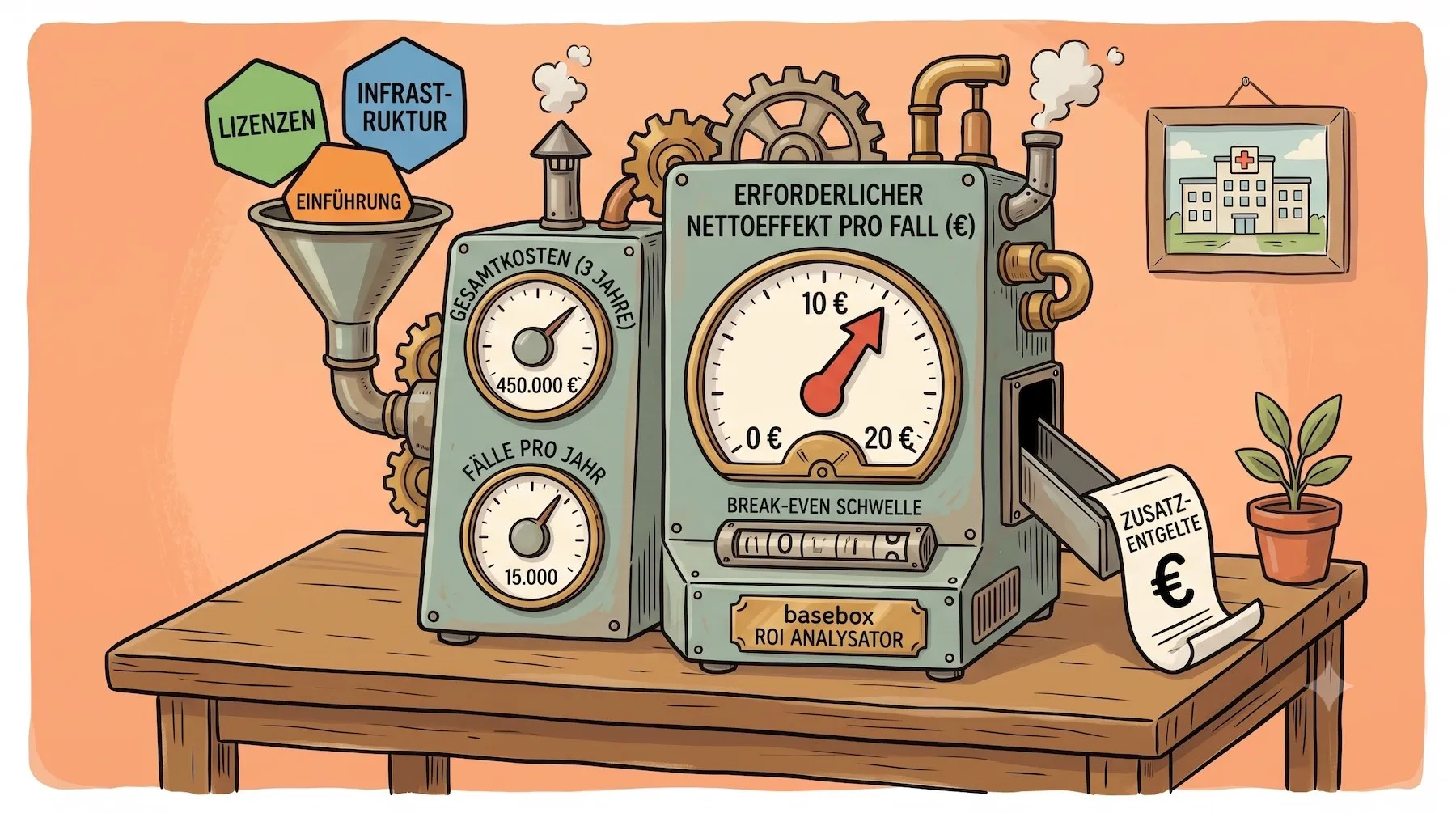
Die Erlössicherung lässt sich mit Daten aus dem eigenen Haus prüfen.
Angenommen, dem Prozess werden 150.000 Euro Kosten pro Jahr zugerechnet und 15.000 Fälle geprüft:
150.000 Euro ÷ 15.000 Fälle
= 10 Euro je Fall
Die Frage lautet dann:
Erzielt der KI-gestützte Prozess gegenüber dem heutigen Verfahren mehr als zehn Euro zusätzlichen Nettoeffekt je geprüftem Fall?
Nicht jeder Hinweis führt zu Erlös.
Die Kette lautet:
erkannt → geprüft → dokumentiert → abgerechnet → akzeptiert → vereinnahmt
Findet die KI etwas, das das Medizincontrolling ohnehin gefunden hätte, entsteht kein zusätzlicher Erlös.
Ein Test mit abgeschlossenen Fällen zeigt, welche zusätzlichen Hinweise fachlich stimmen. Ein begrenzter Einsatz im laufenden Betrieb zeigt danach, was übernommen, abgerechnet und akzeptiert wird.
Damit basiert die Rechnung auf den eigenen Fällen und Prozessen.
Warum weitere Anwendungen den ROI verbessern
Ist die Plattform eingerichtet, können weitere Anwendungen vorhandene Bausteine nutzen:
-
Benutzerverwaltung
-
Rollen und Rechte
-
Sprachmodelle
-
interne Datenquellen
-
Sicherheitsmechanismen
-
Schnittstellen
-
Betriebsprozesse
Jeder neue Use Case braucht einen fachlichen Verantwortlichen. Je nach Anwendung sind zusätzliche Anbindungen oder Anpassungen nötig.
Die technische und organisatorische Grundlage ist jedoch bereits vorhanden.
Dadurch können auch kleinere Anwendungen wirtschaftlich sinnvoll werden. Ein Assistent für interne Richtlinien, eine Dokumentenzusammenfassung oder eine Unterstützung im IT-Service würde allein kaum eine eigene KI-Beschaffung rechtfertigen. Auf einer vorhandenen Plattform fällt vor allem der zusätzliche Aufwand für den jeweiligen Prozess an.
Mit weiteren Anwendungen verteilen sich die festen Kosten auf mehr Nutzer und Aufgaben.
Eine gemeinsame Plattform kann außerdem verhindern, dass für Kodierung, Arztbriefe, Wissenssuche und Vertragsprüfung jeweils eigene Produkte mit getrennten Verträgen, Nutzerkonten und Sicherheitsprüfungen eingeführt werden.
So berechnet ein Krankenhaus den eigenen ROI
Für eine erste Rechnung reichen diese Werte:
| Eingabe | Eigener Wert |
|---|---|
| Jährliche Gesamtkosten | ___ € |
| Zusätzlicher Nettoerlös | ___ € |
| Vermiedene Kosten | ___ € |
| Wirtschaftlich genutzte Kapazität | ___ € |
| Vermiedene Risiken | ___ € |
Daraus folgt:
Gesamtnutzen = Nettoerlös + vermiedene Kosten + Kapazität + vermiedene Risiken
ROI = (Gesamtnutzen – Gesamtkosten) ÷ Gesamtkosten
Für die Entscheidung sollten diese Fragen beantwortet werden:
-
Welche Erlös- und Kosteneffekte lassen sich bereits prüfen?
-
Wie viele Mitarbeitende werden die Plattform tatsächlich nutzen?
-
Wie viel der gewonnenen Zeit wird im Betrieb genutzt?
-
Trägt die Rechnung auch mit vorsichtigen Annahmen?
-
Wie verändert sich der ROI mit weiteren Anwendungen?
Die Geschäftsführung muss heute nicht wissen, welche Anwendungen das Haus in drei Jahren nutzen wird.
Sie muss beurteilen können, ob zusätzliche Erlöse, niedrigere Kosten, mehr Kapazität und geringere Risiken zusammen über den Kosten der Plattform liegen.
Wie basebox dabei unterstützt
basebox stellt Krankenhäusern eine KI-Plattform für den Betrieb in der eigenen Infrastruktur oder in einer eigenen virtuellen Umgebung in einem deutschen Rechenzentrum bereit.
Nutzer, Sprachmodelle, interne Datenquellen und Anwendungen laufen in einer gemeinsamen Umgebung.
Anwendungen mit direkter Erlös- oder Kostenwirkung können zunächst mit Daten aus dem eigenen Haus geprüft werden. Weitere Anwendungen können später auf derselben Plattform hinzukommen.