“Where should I run my AI systems?” This question confronts CIOs daily. The answer seems simple: cloud is modern, scalable, and cost-effective. However, AI as the fourth layer of IT architecture brings new requirements that turn traditional hosting decisions upside down.
Why AI Hosting is Different
With traditional software, the hosting decision is usually a matter of cost: cloud for flexibility, on-premises for control. With AI systems, new dimensions are added:
Data residency becomes critical: AI models require continuous access to training data. Where this data may be stored often determines the hosting option.
Compliance becomes complex: An AI system that makes decisions about credit approval or medical diagnoses is subject to different regulatory requirements than a CRM system.
Performance is unpredictable: AI workloads can spontaneously increase tenfold when complex queries are made. Traditional capacity planning fails.
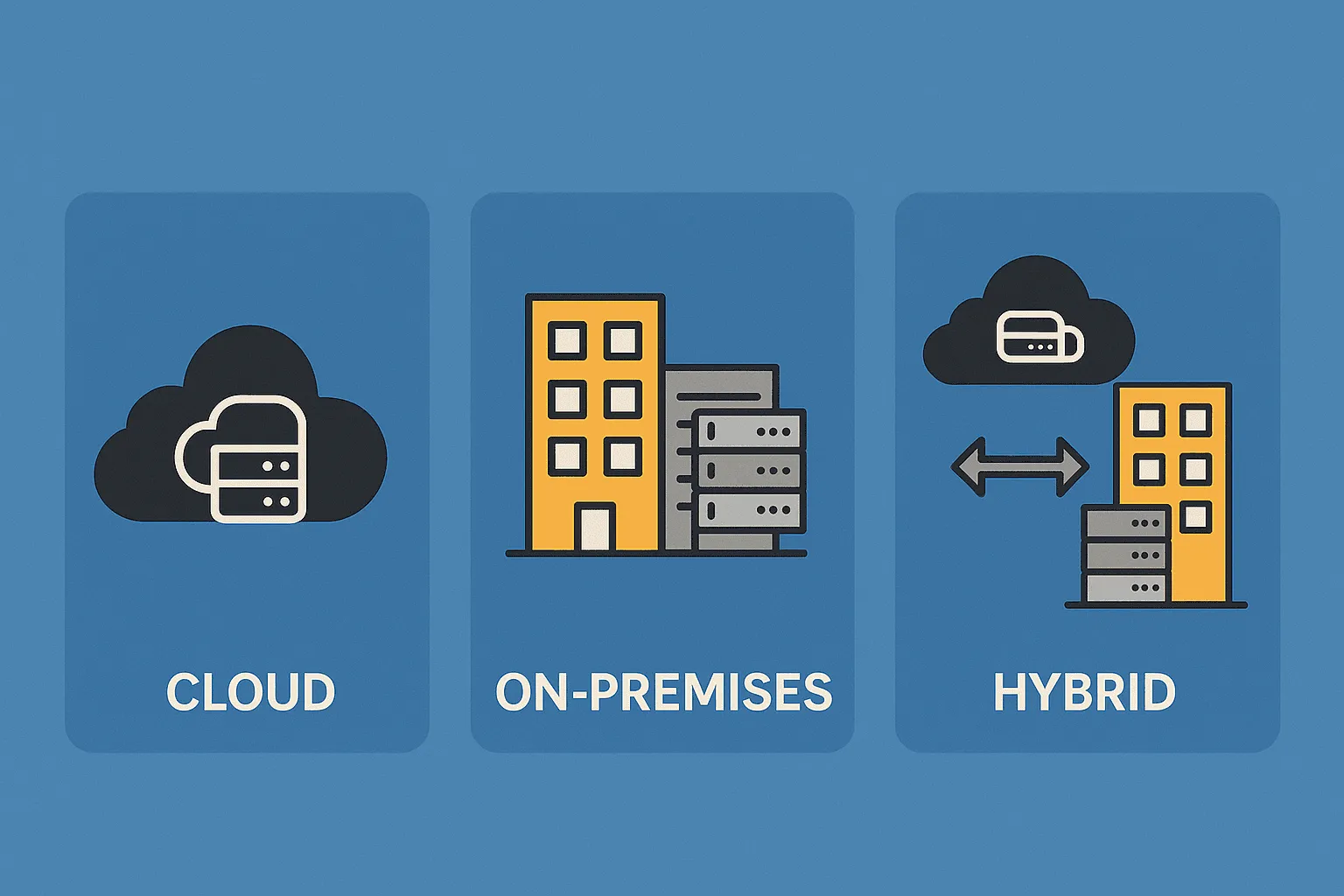
The Three Hosting Options in Detail
Cloud AI: Fast, but with caveats
**
Advantages:**
-
Instant access to GPU capacity
-
Managed services for ML pipelines
-
Automatic scaling
-
No hardware investments
Disadvantages:
-
Data leaves the company
-
Vendor lock-in with specialized services
-
Unpredictable costs with intensive usage
-
Latency with large data volumes
Suitable for: Startups, non-critical applications, prototyping
On-Premises: Control at Any Cost
**
Advantages:**
-
Complete data control
-
Compliance security
-
Predictable costs
-
No dependency on internet connections
Disadvantages:
-
High initial investments
-
Complex hardware management
-
Limited scalability
-
Expertise development required
Suitable for: Banks, healthcare, government agencies, companies with sensitive data
Hybrid: The Best of Both Worlds?
**
Advantages:**
-
Sensitive data remains internal
-
Cloud for peak loads
-
Gradual migration possible
-
Flexibility for different applications
Disadvantages:
-
Complex Architecture
-
Data Flow Management Required
-
Dual Expertise Necessary
-
Potential Security Vulnerabilities at Interfaces
Suitable for: Large companies with mixed requirements
The Decision Matrix
Regulatory Requirements
**
Health data (GDPR Art. 9):** On-premises or certified EU cloudFinancial data (MaRisk, Solvency II): On-premises with documented exceptionsPersonnel data: Hybrid possible, but with strict separationTrade secrets: Dependent on company policy
Technical Requirements
Real-time decisions: On-premises for minimal latencyBatch processing: Cloud for cost efficiencyContinuous learning: Hybrid for flexibilityExperimental projects: Cloud for rapid iteration
Organizational Factors
Existing expertise: Cloud when lacking AI know-howInvestment budget: Cloud for low initial costsLong-term strategy: On-premises for strategic AI systemsVendor preferences: Dependent on existing partnerships
Practical Decision-Making Aids
Questions you should ask yourself
-
Data classification: Which of your data may leave the company?
-
Compliance requirements: Which auditors do you need to satisfy?
-
Performance requirements: How critical are response times?
-
Scaling expectations: How much will AI usage grow?
-
Expertise availability: Do you have AI operations know-how?
Typical Scenarios
**
Scenario 1: Medium-sized Bank**
-
Requirement: Credit risk assessment
-
Decision: On-premises
-
Reason: BaFin compliance, sensitive financial data
**
Scenario 2: E-Commerce Company**
-
Requirement: Product recommendations
-
Decision: Cloud
-
Reason: Scalability, non-critical data
**
Scenario 3: Pharmaceutical Corporation**
-
Requirement: Research Data Analysis
-
Decision: Hybrid
-
Reason: Sensitive research data internal, computing power from cloud
The Hidden Costs
Cloud-Fallen
Data egress fees: Transferring large datasets can become expensiveSpecialized services: GPU instances quickly cost five-figure amounts monthlyVendor lock-in: Migration between cloud providers is complex and expensive
On-Premises Realities
Hardware refresh: GPU technology evolves rapidlyExpertise costs: AI operations specialists are expensive and scarceUnderutilization: Hardware often sits unused
Hybrid complexity
Dual infrastructure: Costs for both environmentsIntegration: APIs and data flows between environmentsSecurity: Protection of hybrid interfaces
What really works
Start with clear data classification
Before you decide on hosting, categorize your data:
-
Public: Cloud without restrictions
-
Internal: Cloud with encryption
-
Confidential: Hybrid with strict separation
-
Secret: On-premises only
Start with pilot projects
Cloud-First for Experiments: Test new AI applications in the cloud firstOn-Premises for Production: Operate proven systems internallyHybrid for Scaling: Offload peak loads to the cloud
Plan exit strategies
Avoid vendor lock-in: Use standardized APIs and data formatsPrepare for migration: Documentation and processes for transitions**
Multi-cloud strategy:** Reduce dependencies on individual providers
The strategic dimension
AI hosting is not just a technical, but a strategic decision. It determines:
-
Which AI applications you can actually implement
-
How quickly you can respond to new requirements
-
How dependent you become on external providers
Today’s hosting decision shapes your AI strategy for years to come. Don’t just choose for today, but for the AI-native organization you want to become.
The question isn’t “Cloud or on-premises?” but rather “Which hosting strategy enables our AI vision?” The answer to that is individual – but it should be made deliberately.
This is the fourth part of our series on AI integration beyond pilot projects. Next week: Which AI governance policies you really need and what must be included in them.